Ward smoking control, restroom status, patient calls, cleaning and transport dispatch share one sensing network and FM platform, with response times logged for accountability.
Usage intensity varies widely between wards, restrooms and public areas; fixed schedules waste staff and still miss peak-time cleaning.
No-smoking zones rely on patrols and verbal warnings, with no objective data or event records for assessment or traceability.
Calls, cleaning, transport and inspections live in separate systems with inconsistent dispatch rules, so service times cannot be compared.

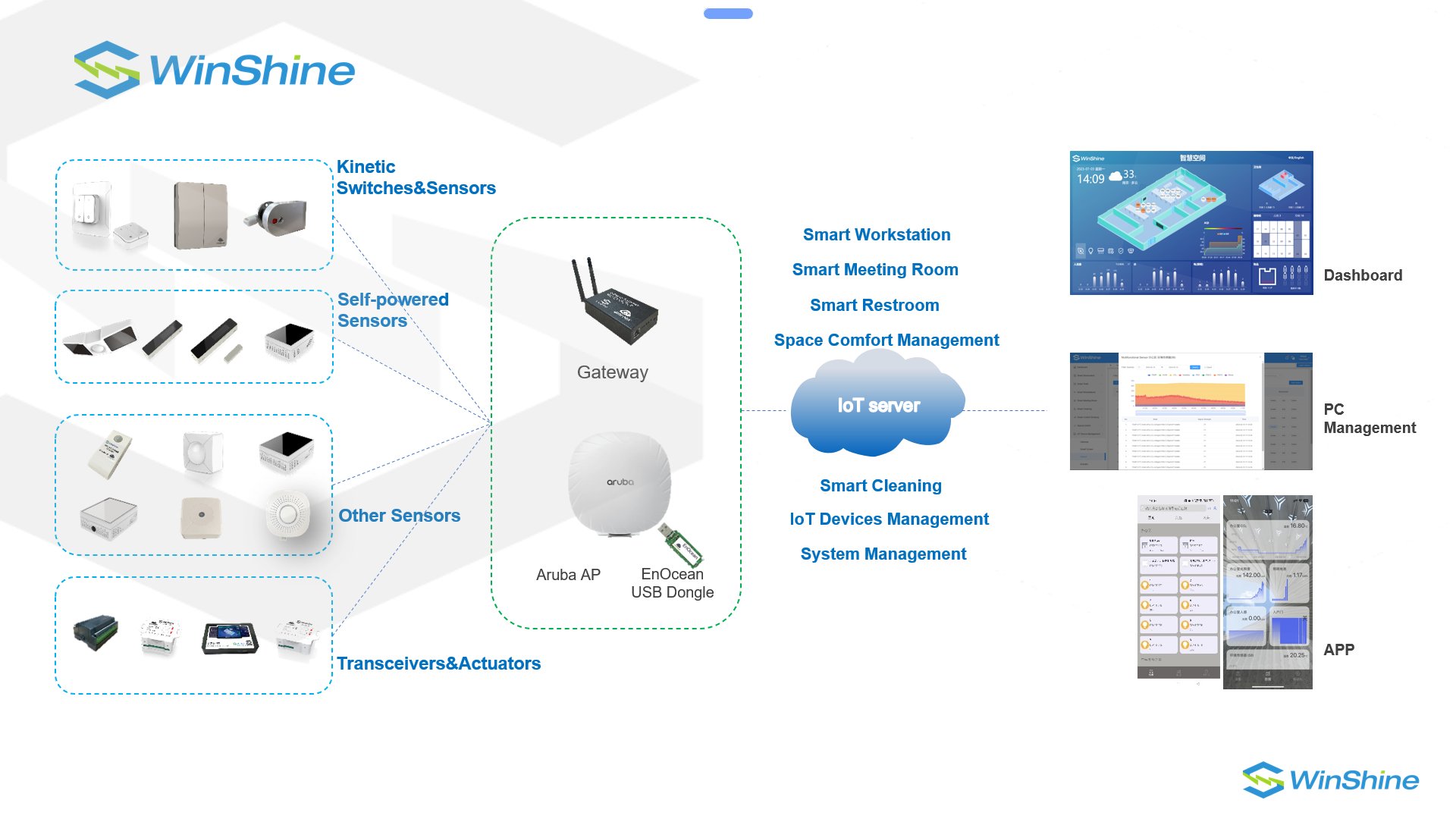
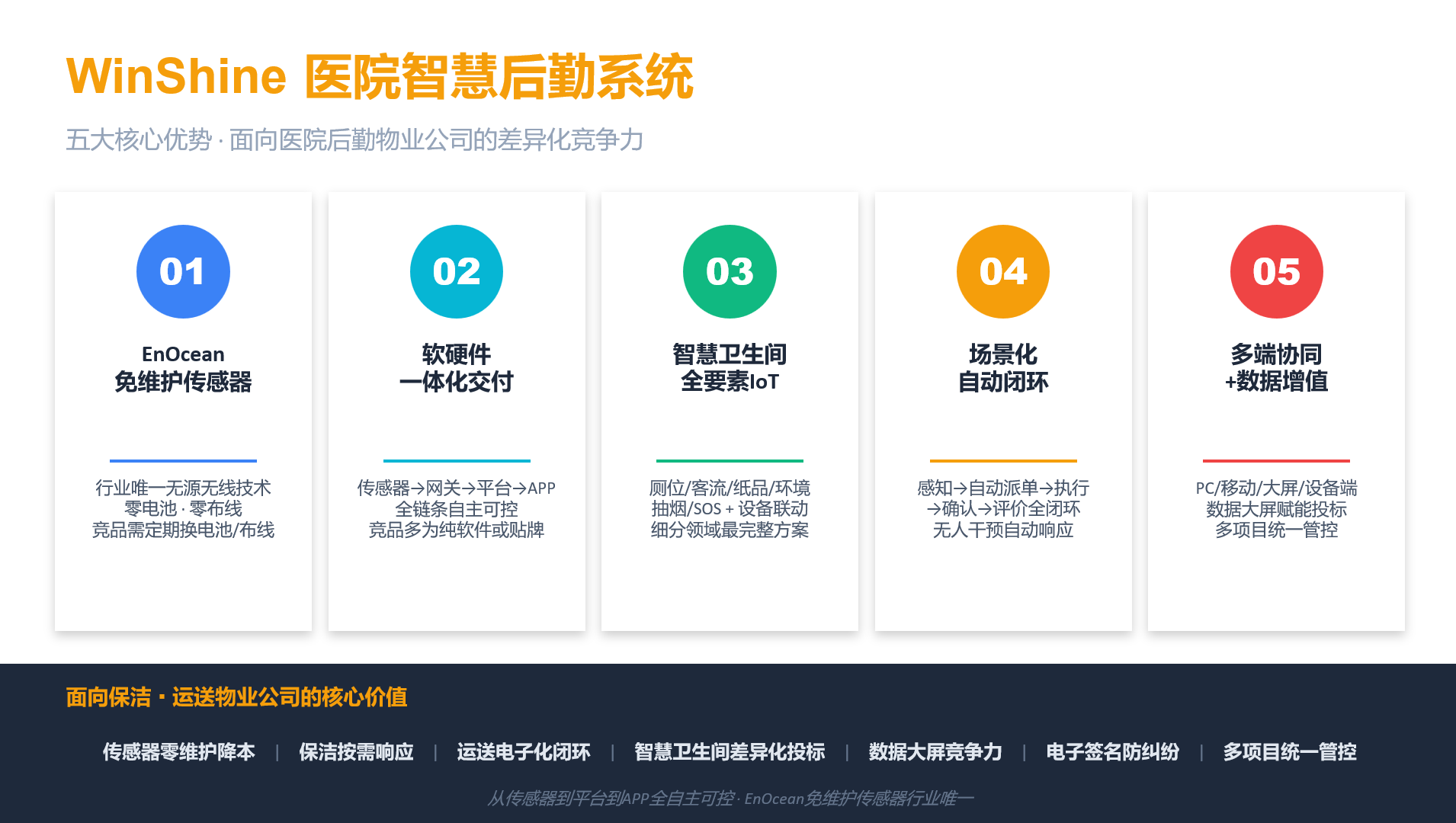
EnOcean battery-free sensors handle environment and status, Bluetooth beacons handle inspection positioning, and self-powered buttons handle calls
EnOcean 868 MHz via gateways, with Bluetooth and 4G terminals connecting directly to the platform — suited to older hospital buildings where wiring is difficult
One entry for repairs, cleaning, transport, caregiver orders, inspections and attendance, with customisable dashboards
Restroom usage intensity, consumable levels or time rules trigger cleaning orders; acceptance, arrival and completion are all logged.
PM sensors flag smoking with audible/visual cues and log the event; alert frequency by ward supports management reviews.
Cubicle occupancy, odour and footfall on display, with entrance guidance linked to cleaning response to shorten peak queues.
Self-powered buttons mount at bedsides and in bathrooms without wiring; one press reaches duty and caregiver terminals.
Caregiver tasks, specimen and supply transport queue under one rule set, avoiding duplicate dispatch and repeated trips.
Bluetooth beacon checkpoints plus work-order records produce verifiable logs of patrol routes, attendance and response times.
Typical configuration only. Actual points depend on ward bed count, restroom quantity and existing hospital system interfaces; dispatch rules can be customised to hospital workflows.
Built with facility-management partners including Aramark: 89 hospital crests recorded; the full province-indexed client list is on the case studies page.
With unified work-order definitions, response time, completion rate and inspection coverage can be compared by department and shift without manual consolidation.
Share bed count, restroom count and existing FM systems for a proposal with a model list, point layout and budget range.