Non-visual mmWave presence, door contacts, bedside buttons and energy state establish activity patterns; prolonged inactivity, night-time door/window anomalies or one-touch calls alert caregivers by severity.
Bedrooms and bathrooms are hard to cover with cameras, and residents and families generally resist continuous recording.
Care staff are limited; scheduled room checks consume many hours and prolonged inactivity is often only noticed at meal delivery or rounds.
Calls, access, energy and inspections sit in separate systems with no unified activity view or tiered reminder rules.

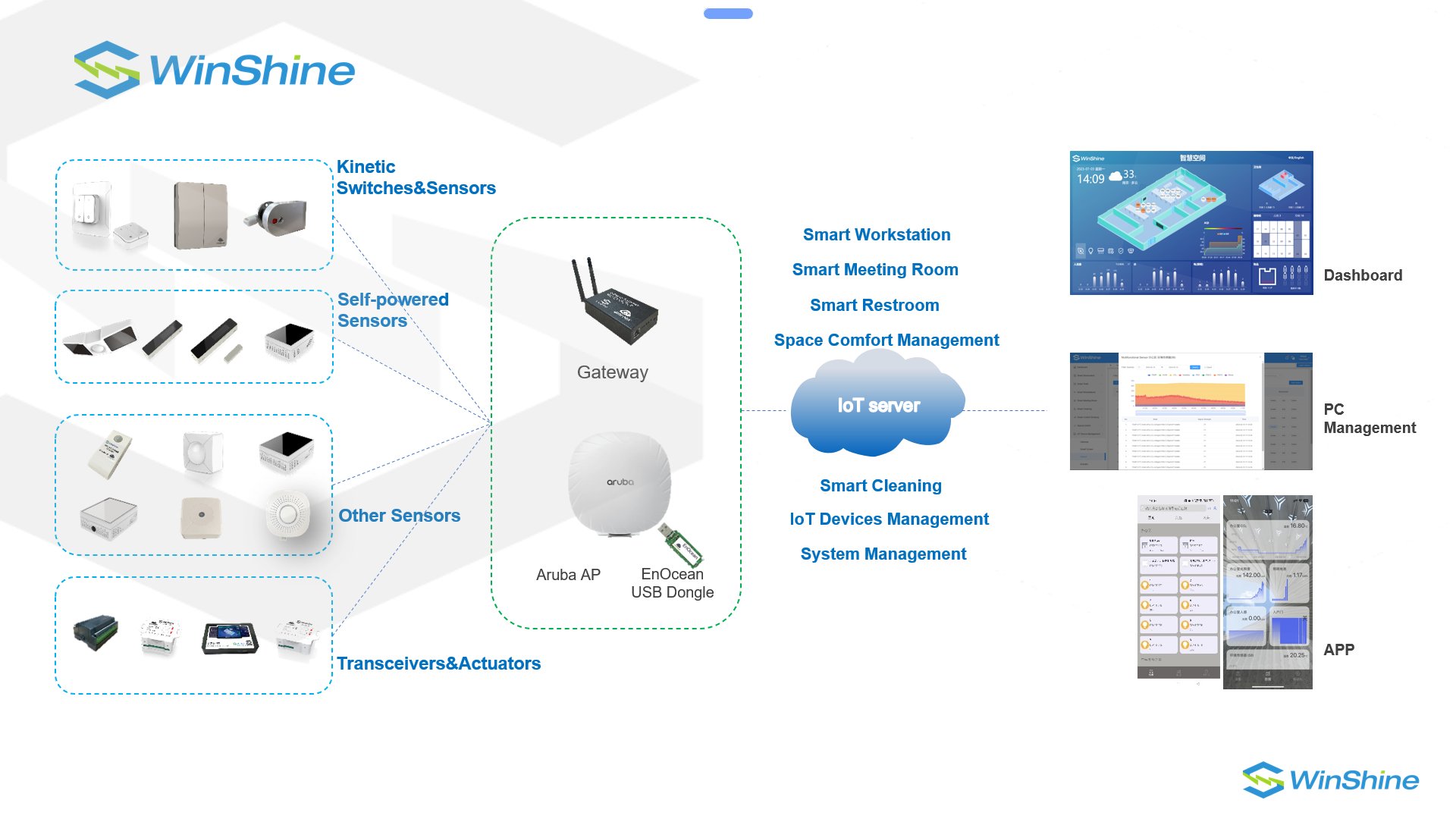
mmWave presence, PIR, door/window contacts, water leak and self-powered buttons — no image capture
EnOcean 868 MHz aggregates battery-free points; a multi-mode IoT gateway handles backhaul, with room-level administration
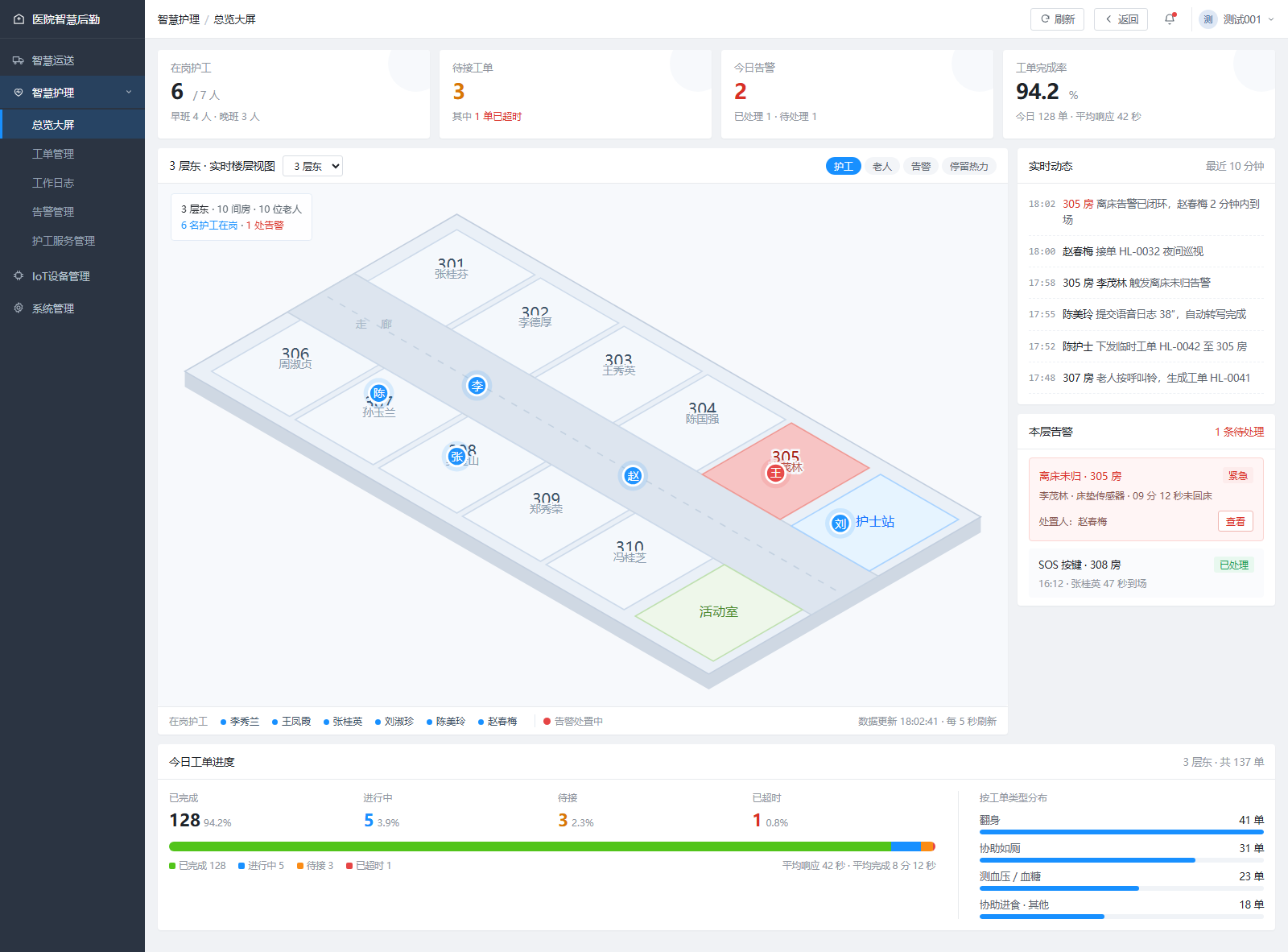
Care dashboards, activity patterns, tiered reminders and care records, with rules per facility / floor / room
Presence and door-contact state describe daily routines in a daily activity overview, with no image data generated.
Set an observation window per room; exceeding it with no activity change triggers a reminder for caregiver review.
LD-OSR mmWave sensors detect stationary occupants and offer optional fall detection for higher-risk rooms.
Door contacts report opening/closing outside set hours, or night activity that deviates clearly from the routine, for duty-staff review.
LD-CC self-powered buttons mount at bedsides and in bathrooms without wiring; each press is kinetically powered and reaches the care terminal directly.
Reminders are routed by severity to floor duty staff and nursing stations; review and handling are logged into a traceable care record.
Typical configuration only. Observation windows, alert levels and review workflows are set by the operator's service standards; system output supports but does not replace on-site caregiver judgement.
Presence and door/window events describe activity patterns without cameras in bedrooms or bathrooms, easing concerns for residents and families.
Prolonged inactivity and night anomalies are flagged by the system and reviewed by staff; patrol schedules can be prioritised from the activity overview.
Share room count, care levels and the existing call system for a proposal with a model list, point layout and budget range.