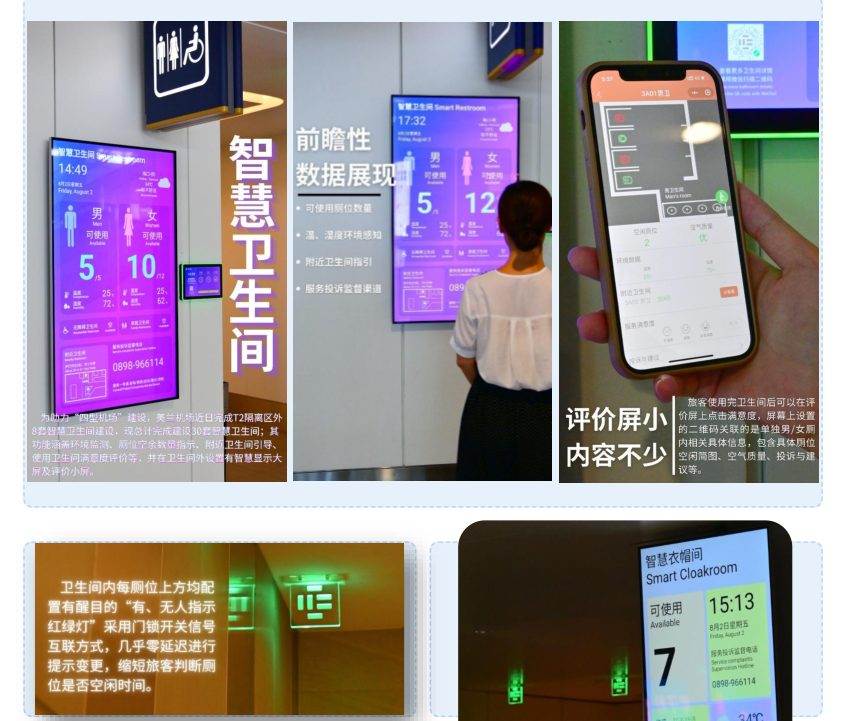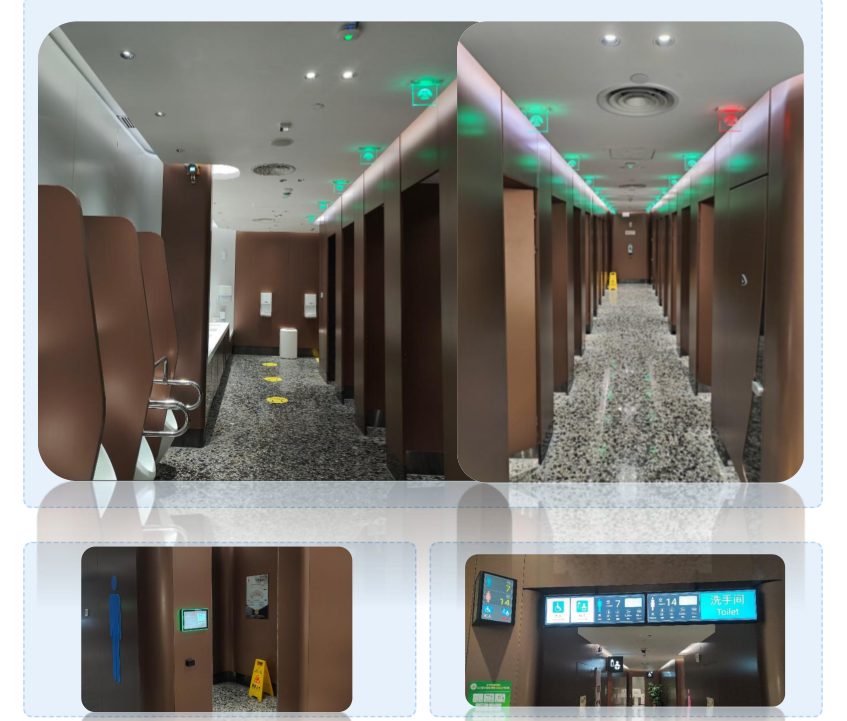
Beijing Daxing International Airport
75 battery-free wireless devices in the terminal's public restrooms
Cubicle guidance, odour-linked deodorisation and passenger feedback in one loop
From Beijing Daxing's terminal to Tongji University Library, from AstraZeneca's four campuses to 92 hospitals across 20 provinces. Every project runs on WinShine's battery-free wireless sensing network; device counts and go-live dates come from project records.
Note: device counts here are itemised from project records; the site-wide total of approx. 39,600 battery-free wireless devices also includes projects not in this casebook.
Products shipped to Europe, the Middle East, Asia and North America.
Note: volume export refers to delivered shipments; sample delivery is still in customer testing. Overseas figures are listed separately and are not counted as domestic project cases.
The five airports total approx. 6,044 devices. Cubicle guidance, odour-triggered deodorisation, consumable levels, SOS calls and cleaning work orders all close the loop on one platform, with no downtime and no trenching or rewiring.

75 battery-free wireless devices in the terminal's public restrooms
Cubicle guidance, odour-linked deodorisation and passenger feedback in one loop

604 devices, one of the largest airport deployments
Full cubicle sensing, odour-linked deodorisation and people-flow-based shift planning

Approx. 5,000 devices for consumables management under very high passenger flow
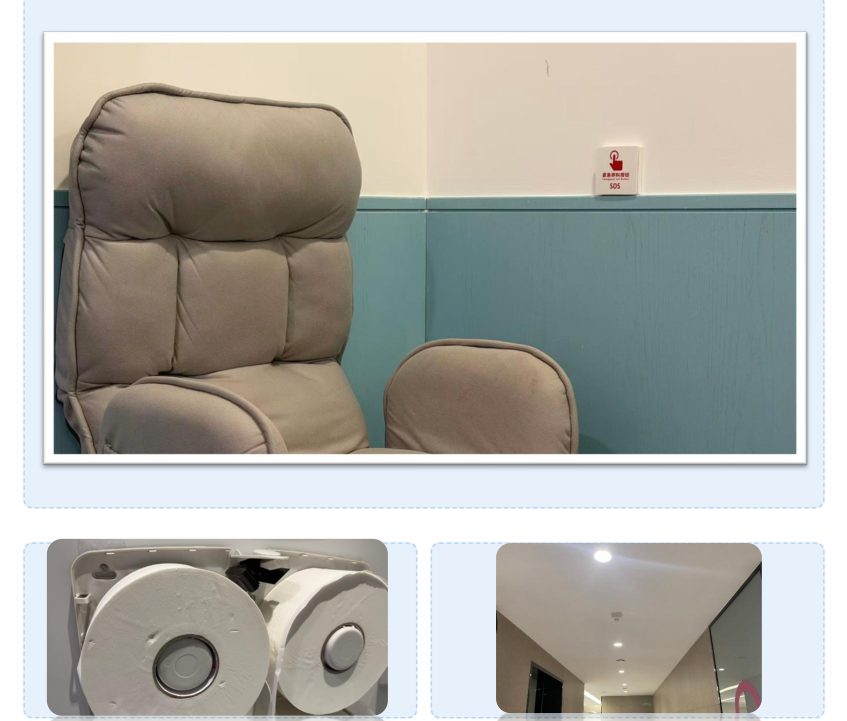
One-touch SOS in accessible and baby-care rooms goes straight to the duty desk

172 devices; deodorisers start automatically when odour exceeds the threshold
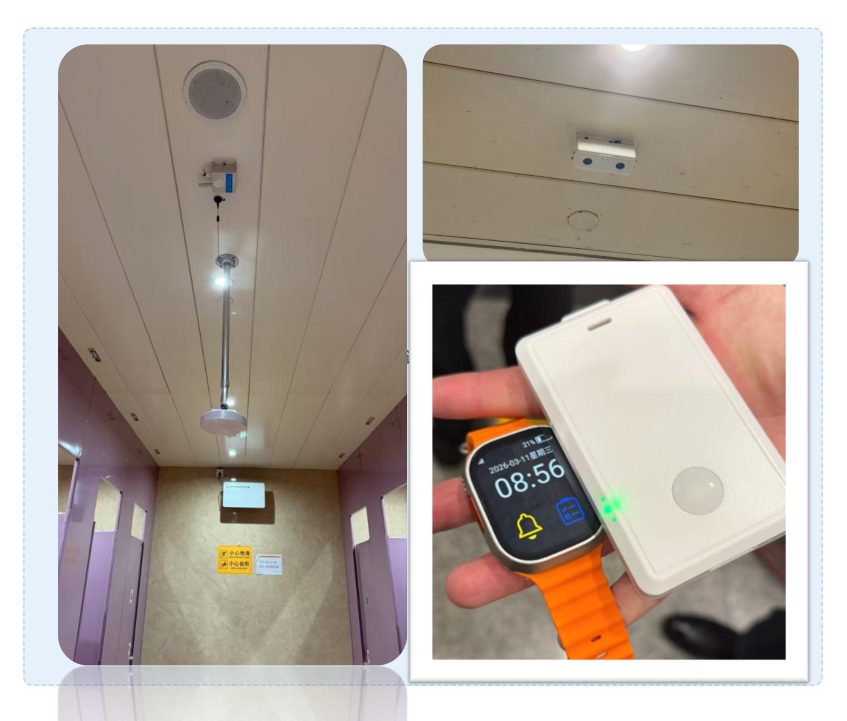
Cleaner positioning and smartwatches make work trails traceable

193 devices across the terminal, with automatic fall-detection alarms
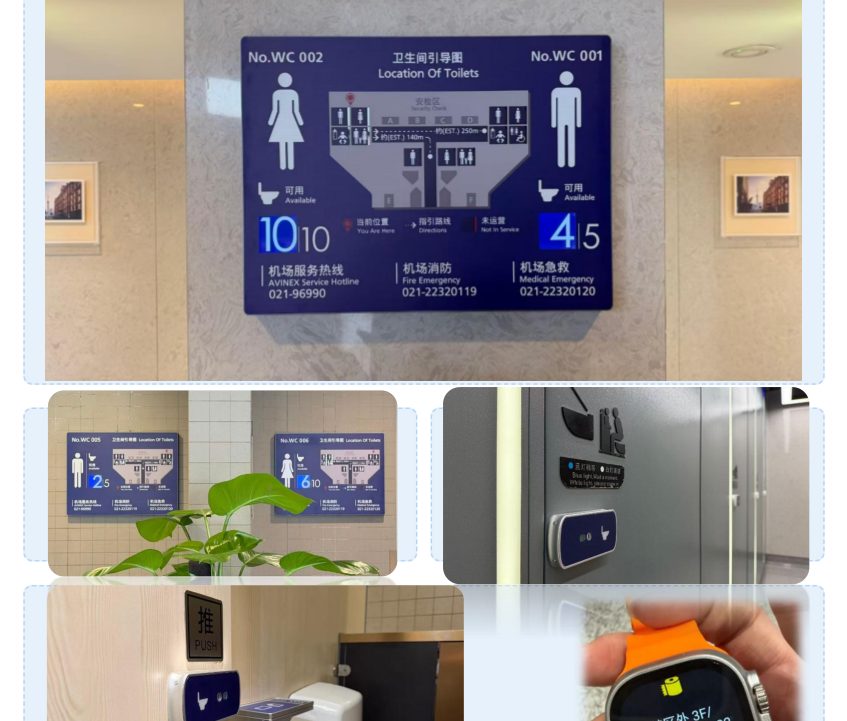
Guidance signage, environmental sensing and cleaner positioning close the loop
11 corporate projects totalling approx. 3,231 devices across headquarters, R&D campuses, mixed-use complexes and property operators. From a 35-device pilot to AstraZeneca's 1,975-device four-site rollout, the configuration scales with demand.

In service since 2020, validating long-term stability in offices
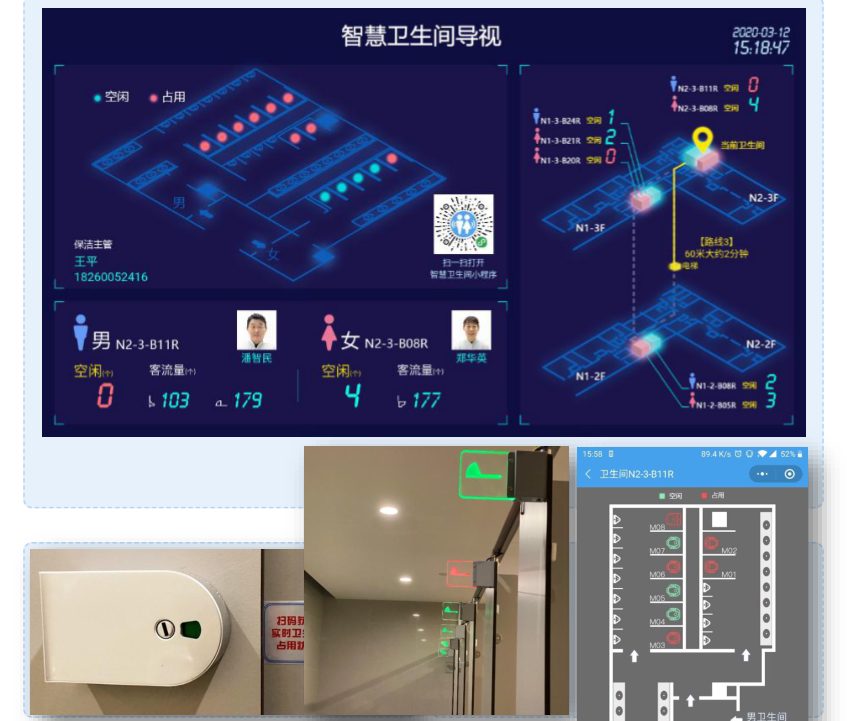
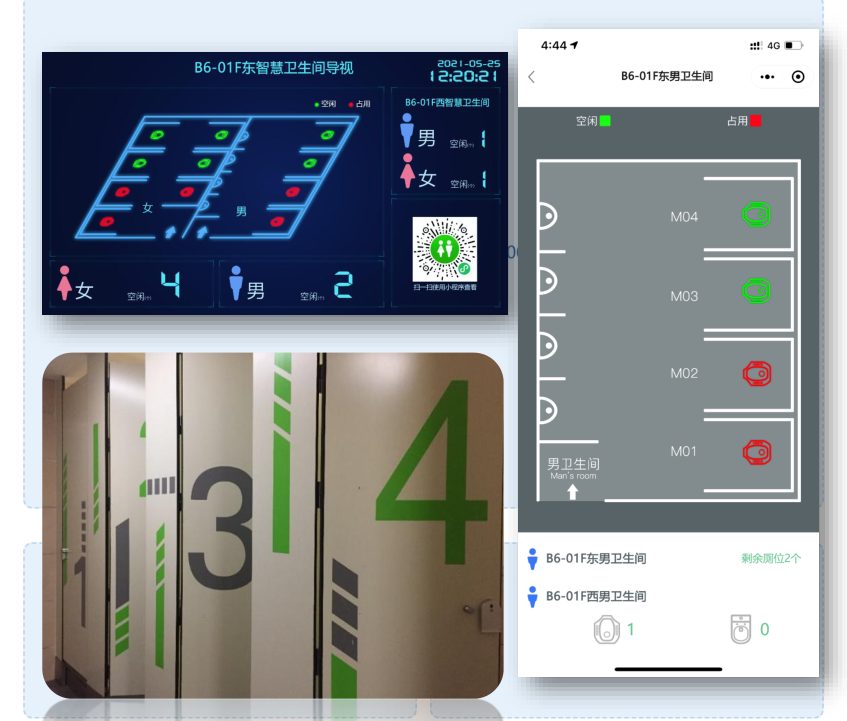
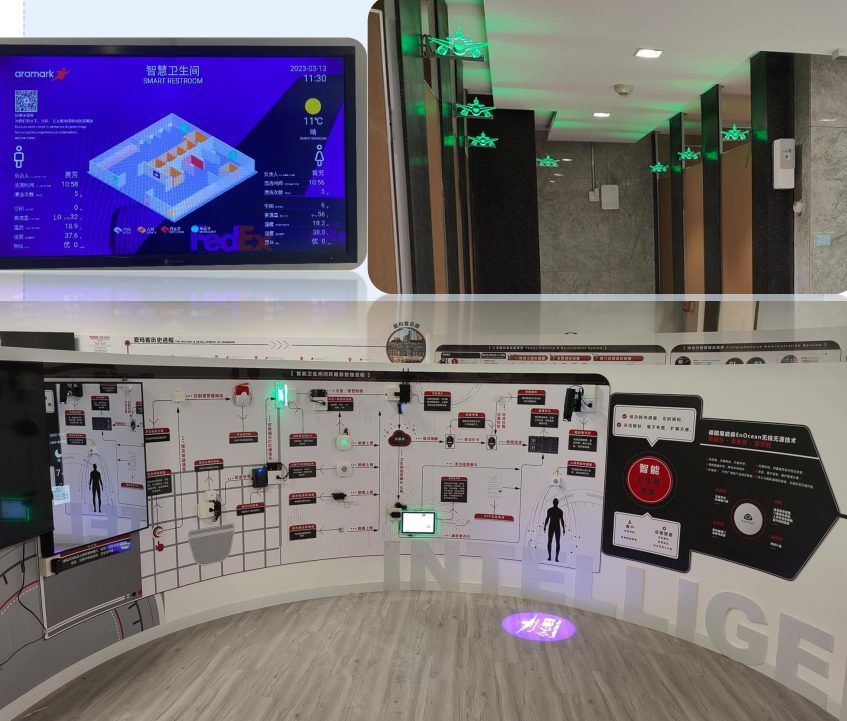
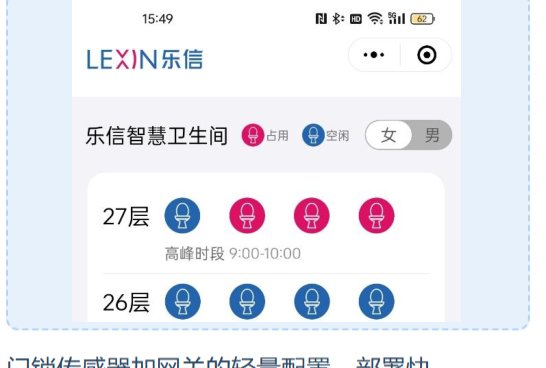
Two-level guidance via entrance displays and cubicle lights, plus a mini-program

An early corporate project with a mini-program showing nearby free restrooms
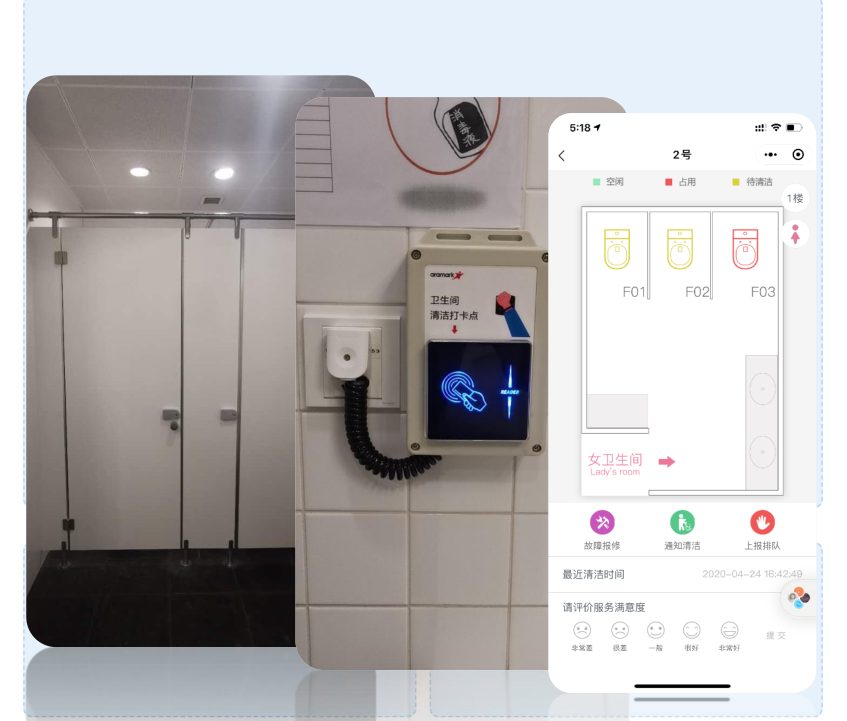
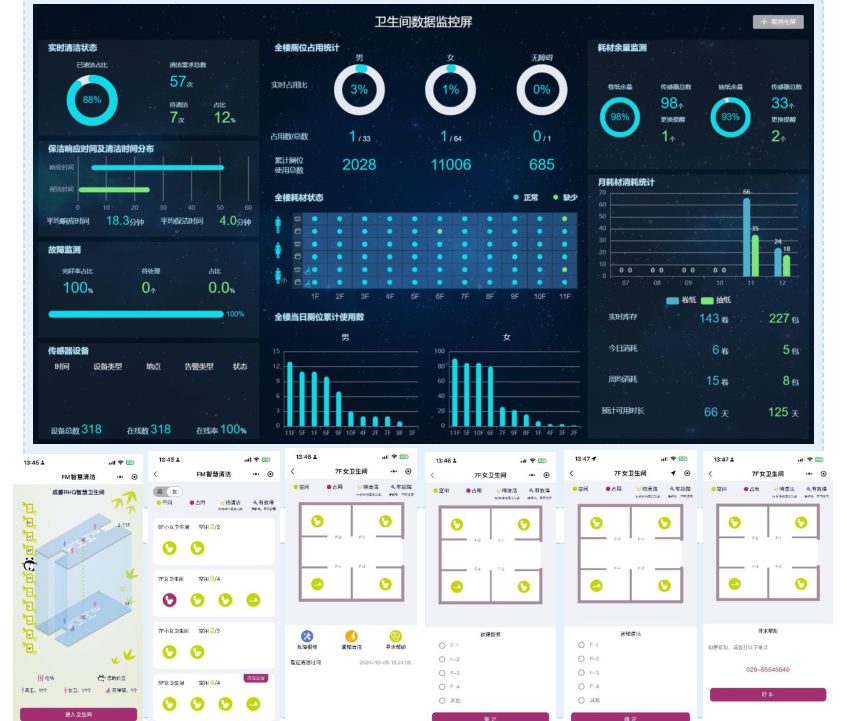
Check-in terminals log cleaning tasks, closing the sensing-to-action loop

400 devices across a multi-floor commercial office
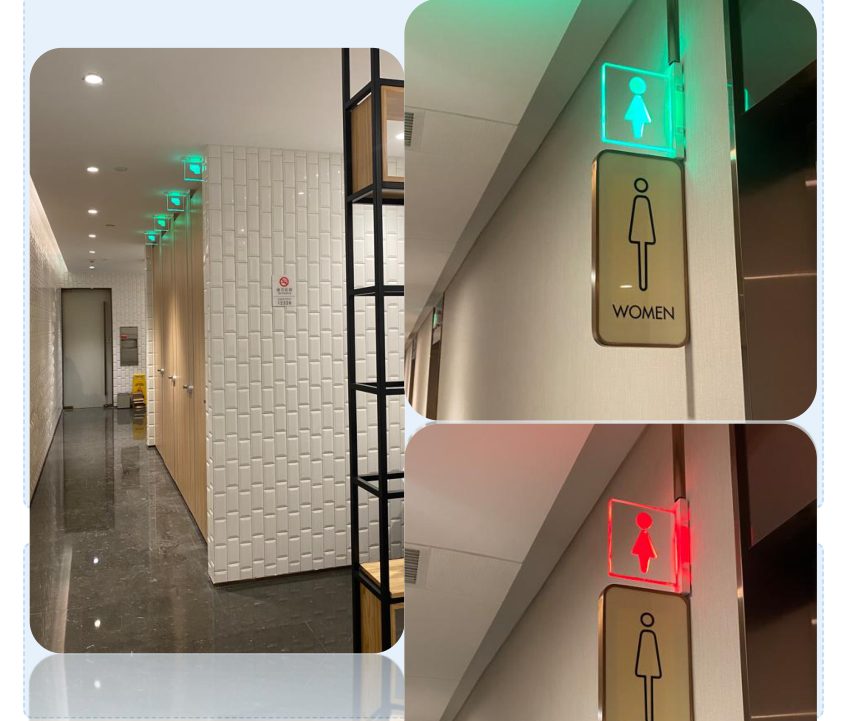
Cubicle lights give at-a-glance status for on-demand cleaning

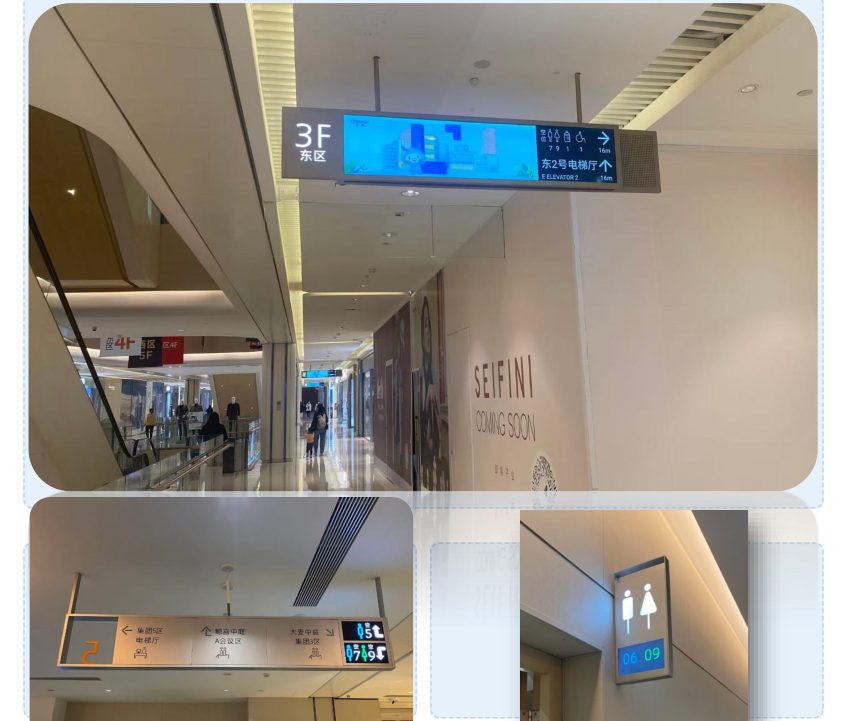
44 devices across the office area with central entrance guidance
Guidance displays and a mini-program show available cubicles in real time

A property-operator scenario where cleaning service is measurable
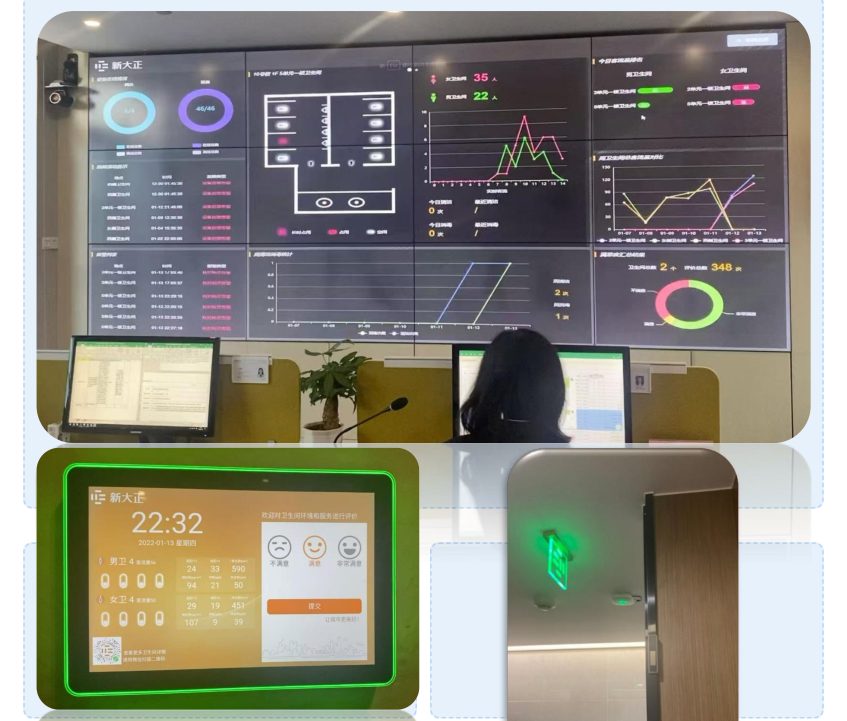
Environmental sensing plus feedback screens; tasks dispatched via mini-program

The classic combination of door lock, controller and indicator light
Colour indicators above cubicles are readable from the corridor

Odour monitoring plus people counting make environmental quality visible
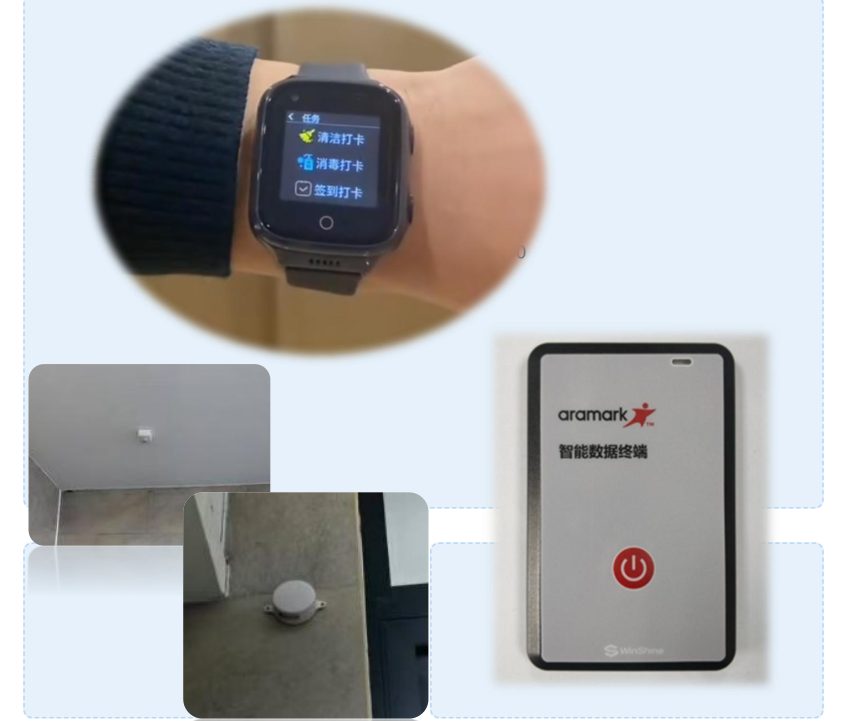
Smartwatches and Bluetooth beacons make staff attendance traceable

1,975 devices across four sites — the largest corporate deployment
Cleaning smartwatches and Bluetooth beacons for unified multi-site operations

50 devices covering sensing, guidance and staff management
A large display for central status and feedback screens for user ratings

A lightweight door-lock-sensor plus gateway setup that deploys quickly
No batteries, no wiring, minimal ongoing maintenance cost

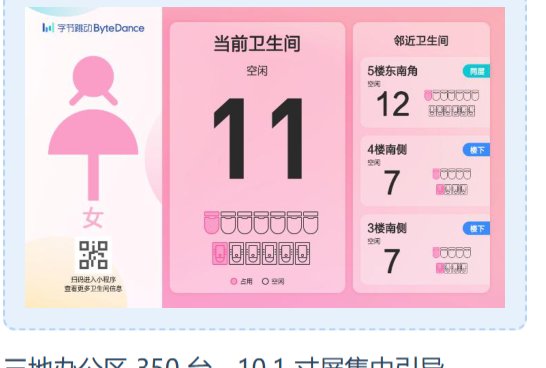
350 devices across three offices, guided by 10.1-inch displays
Wire-free installation with no disruption to office routines
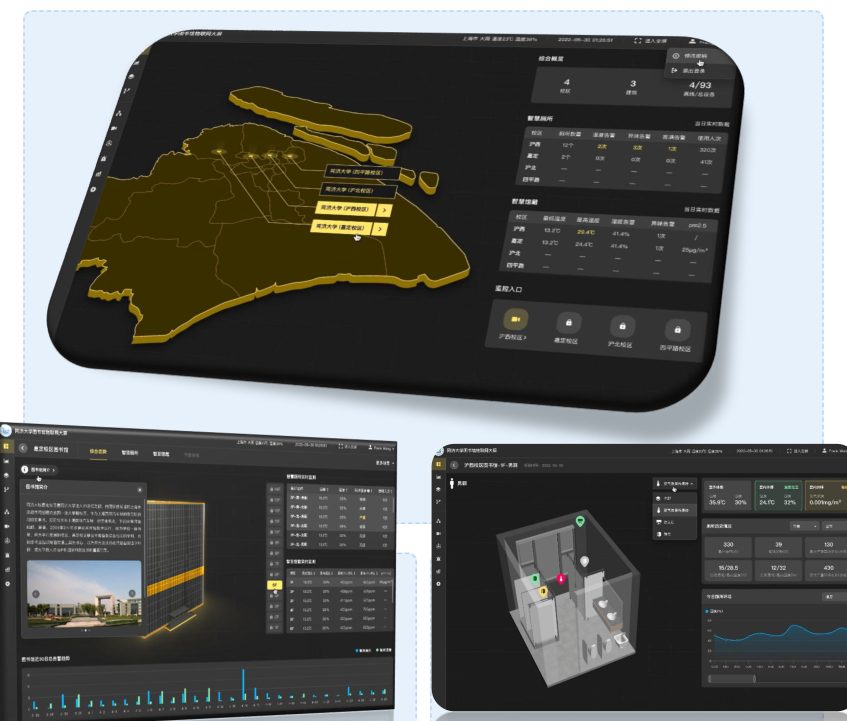
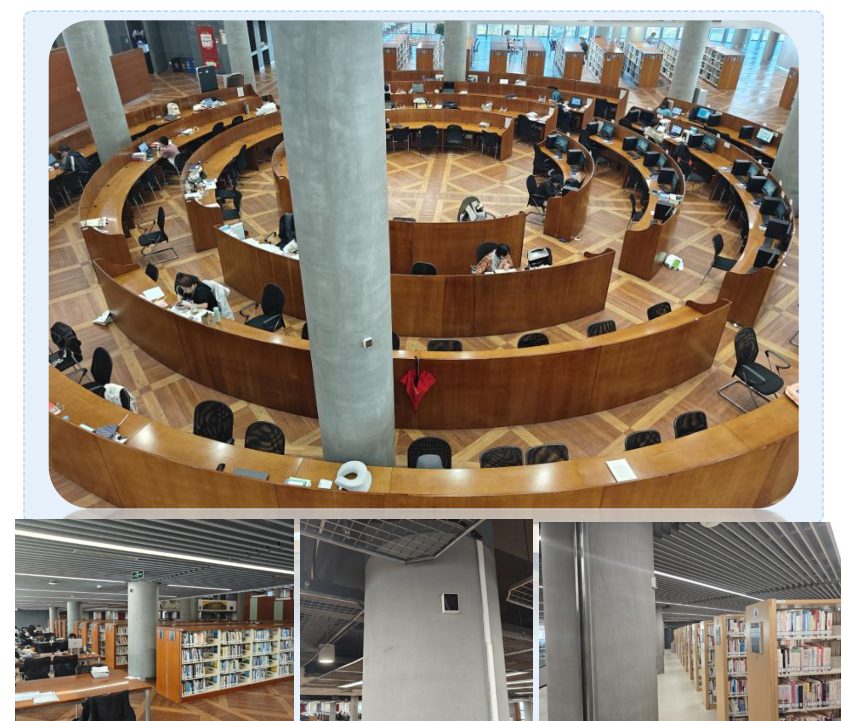
Two projects at Tongji University Library total 1,071 devices. Restroom retrofits and environmental monitoring share one platform; installation avoided teaching hours, with no power shutdown or rewiring.

948 devices across the library's public restrooms on every floor
Odour-linked deodorisers and ventilation, retrofitted without suspending classes

Live temperature, humidity and CO₂ with threshold alerts
Shares the campus smart-restroom management platform
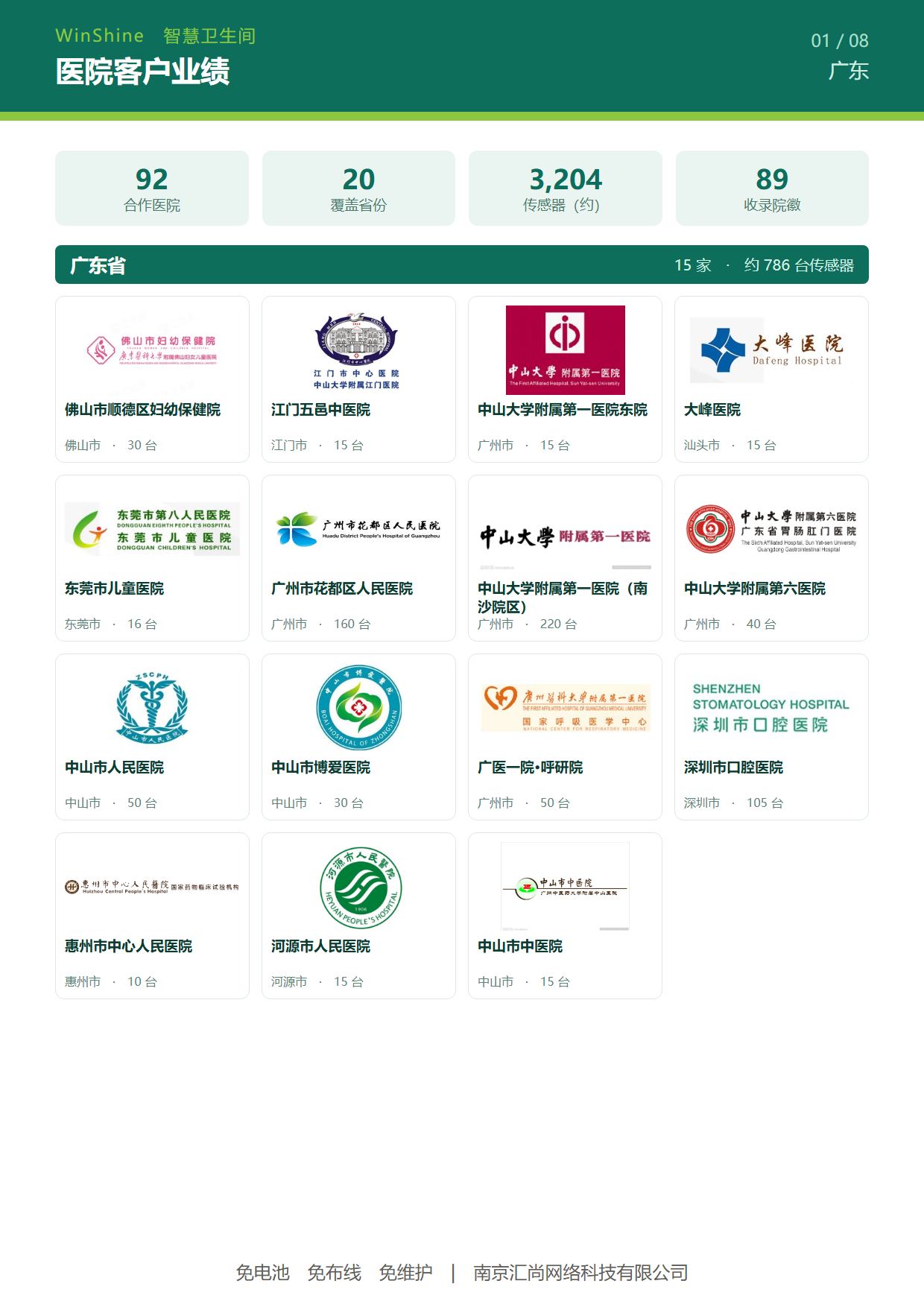
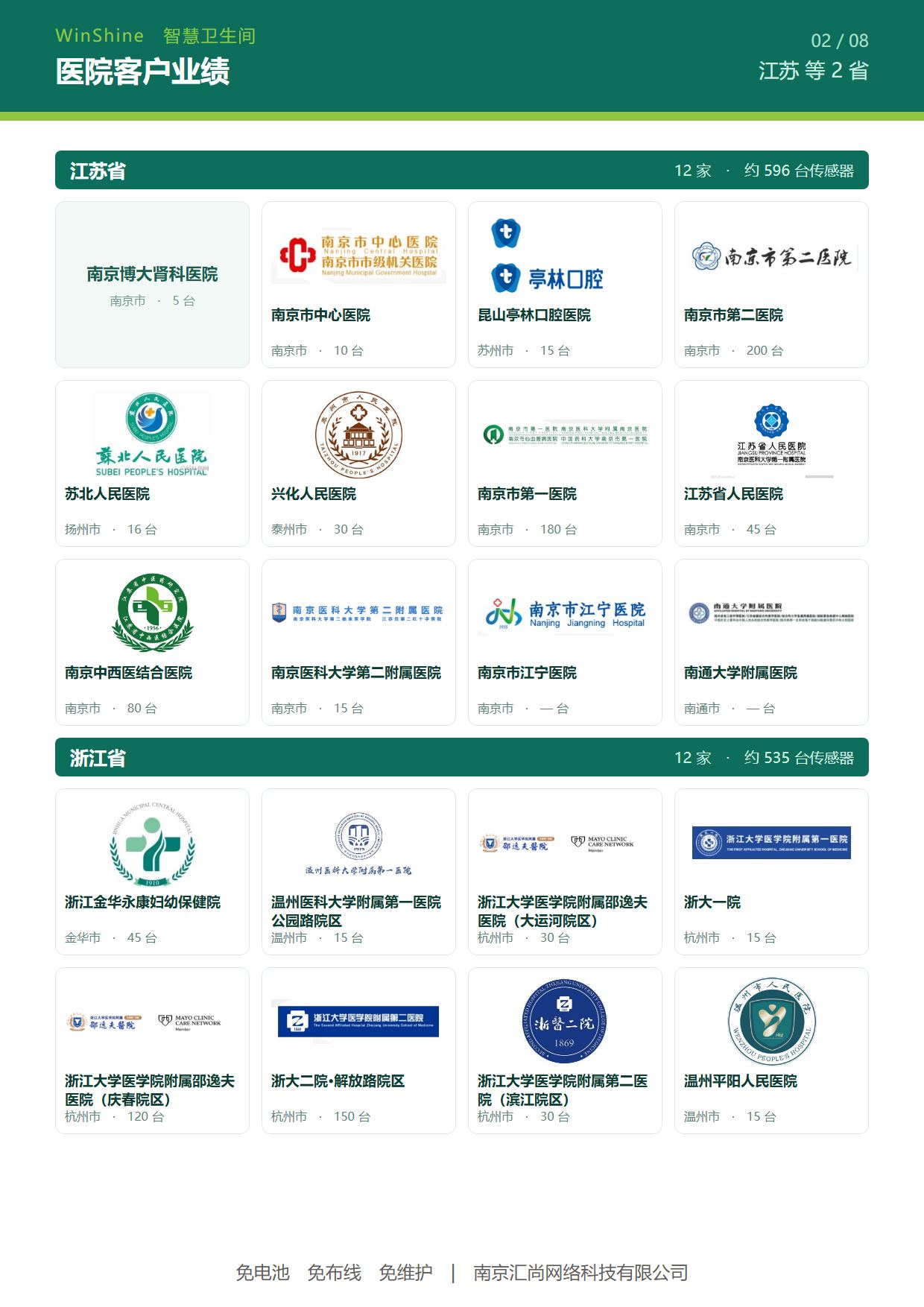
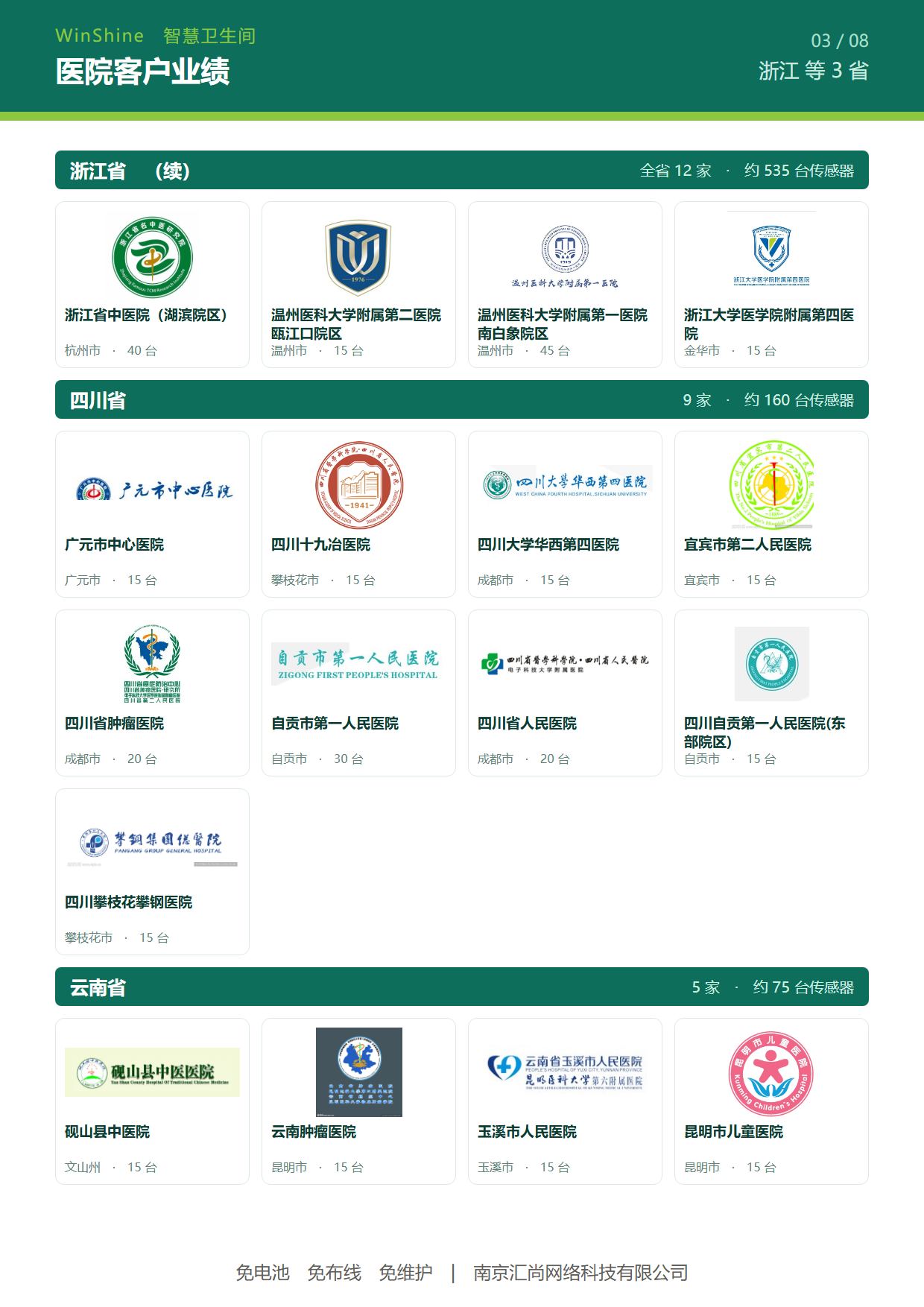
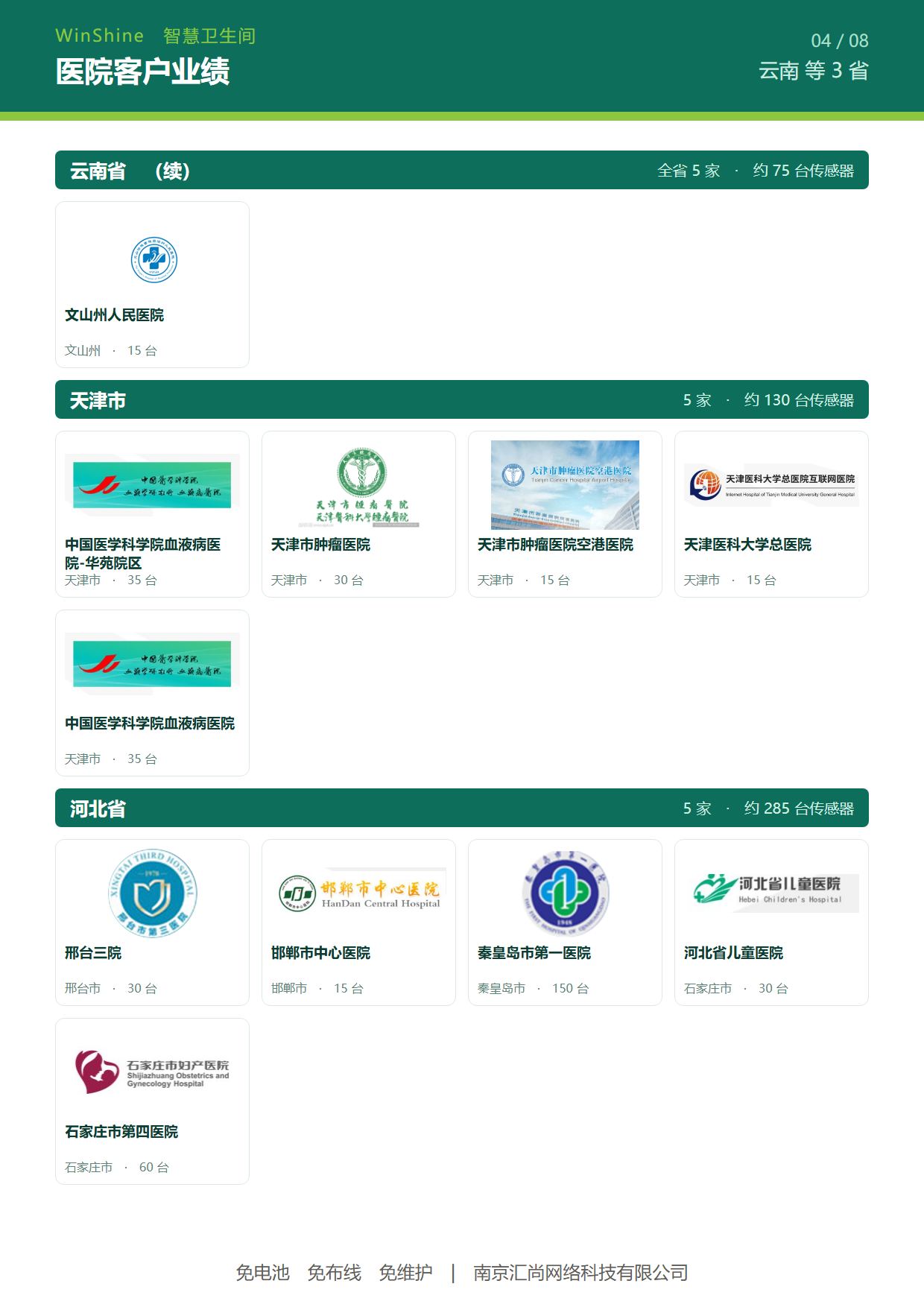
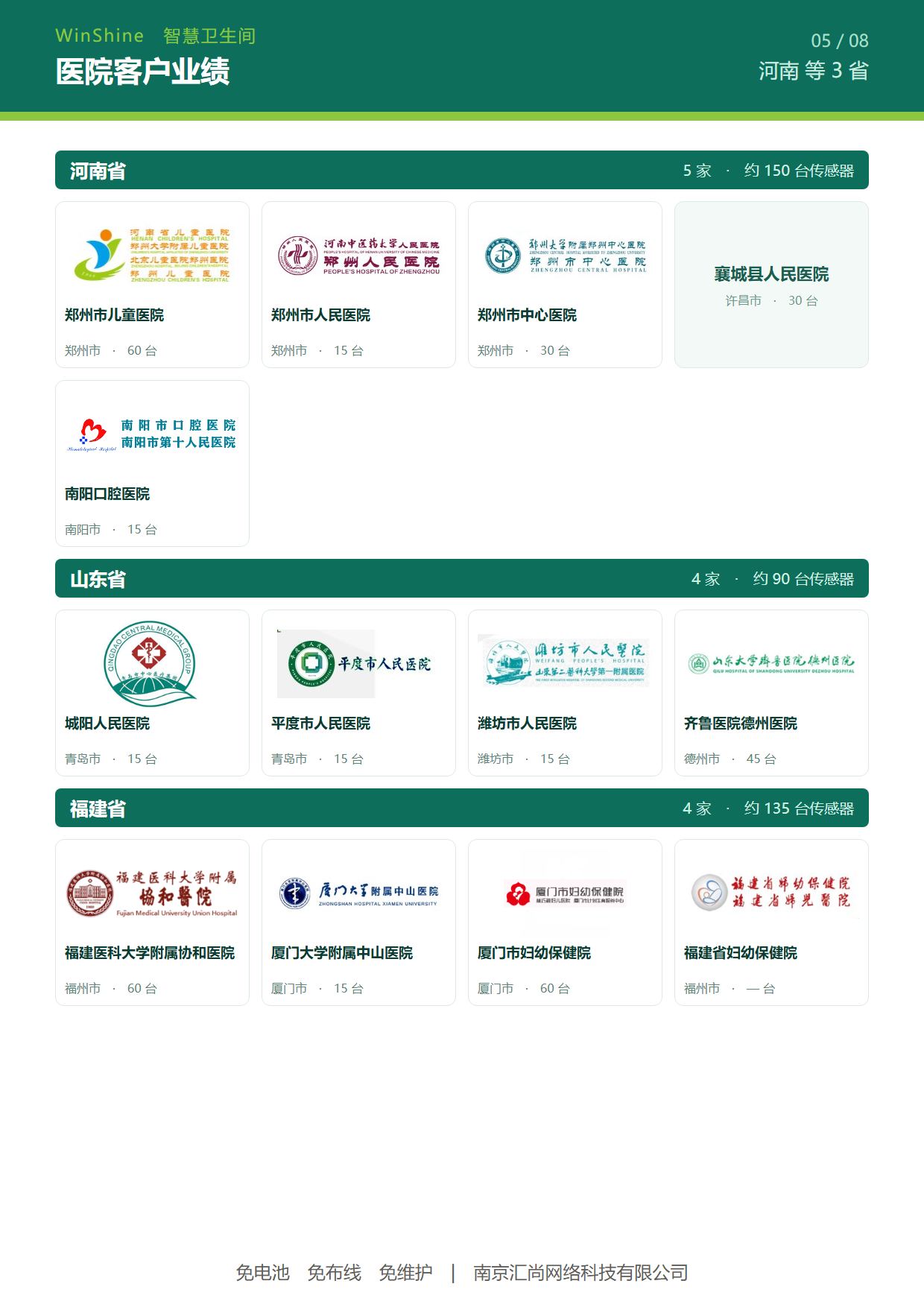
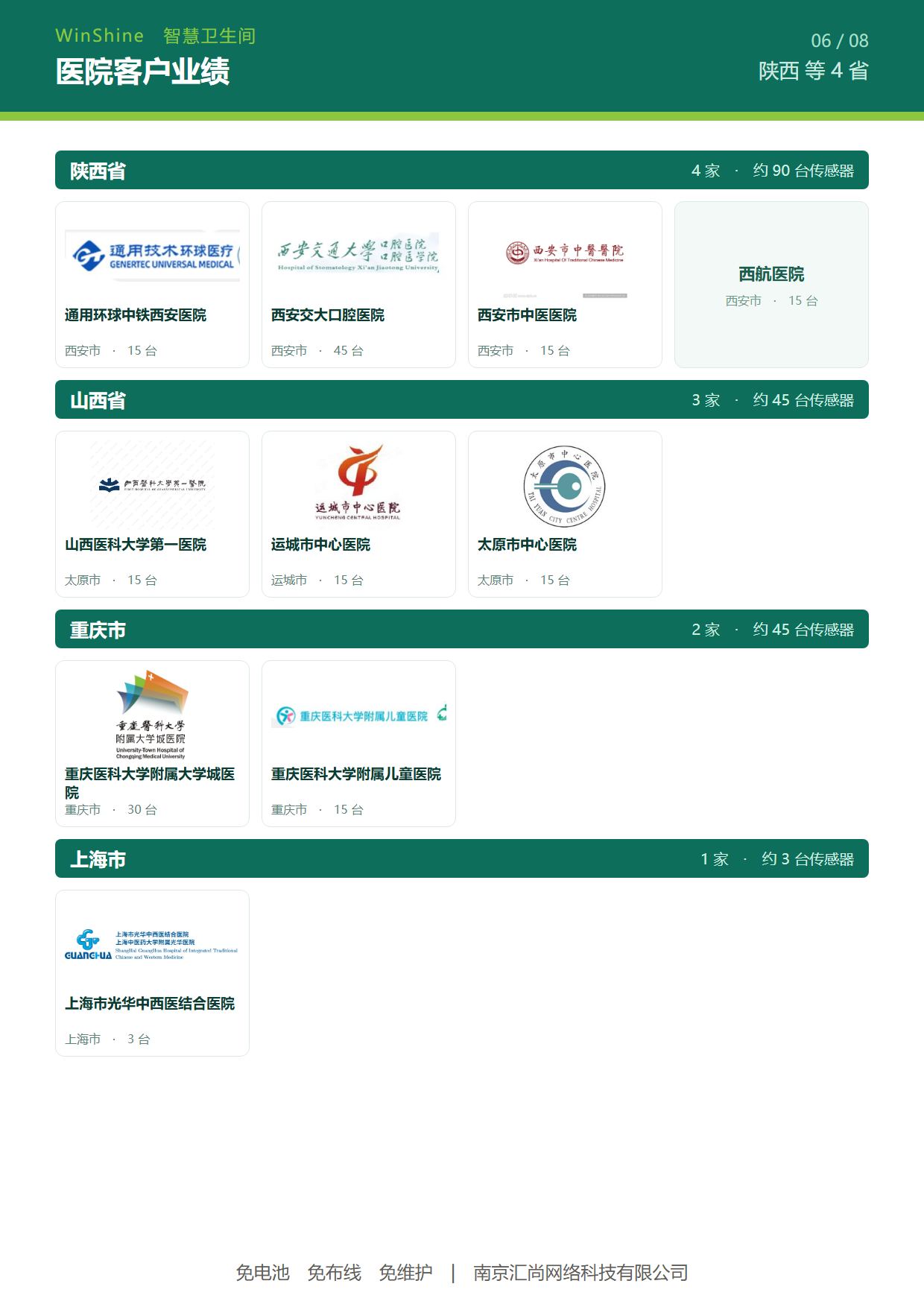
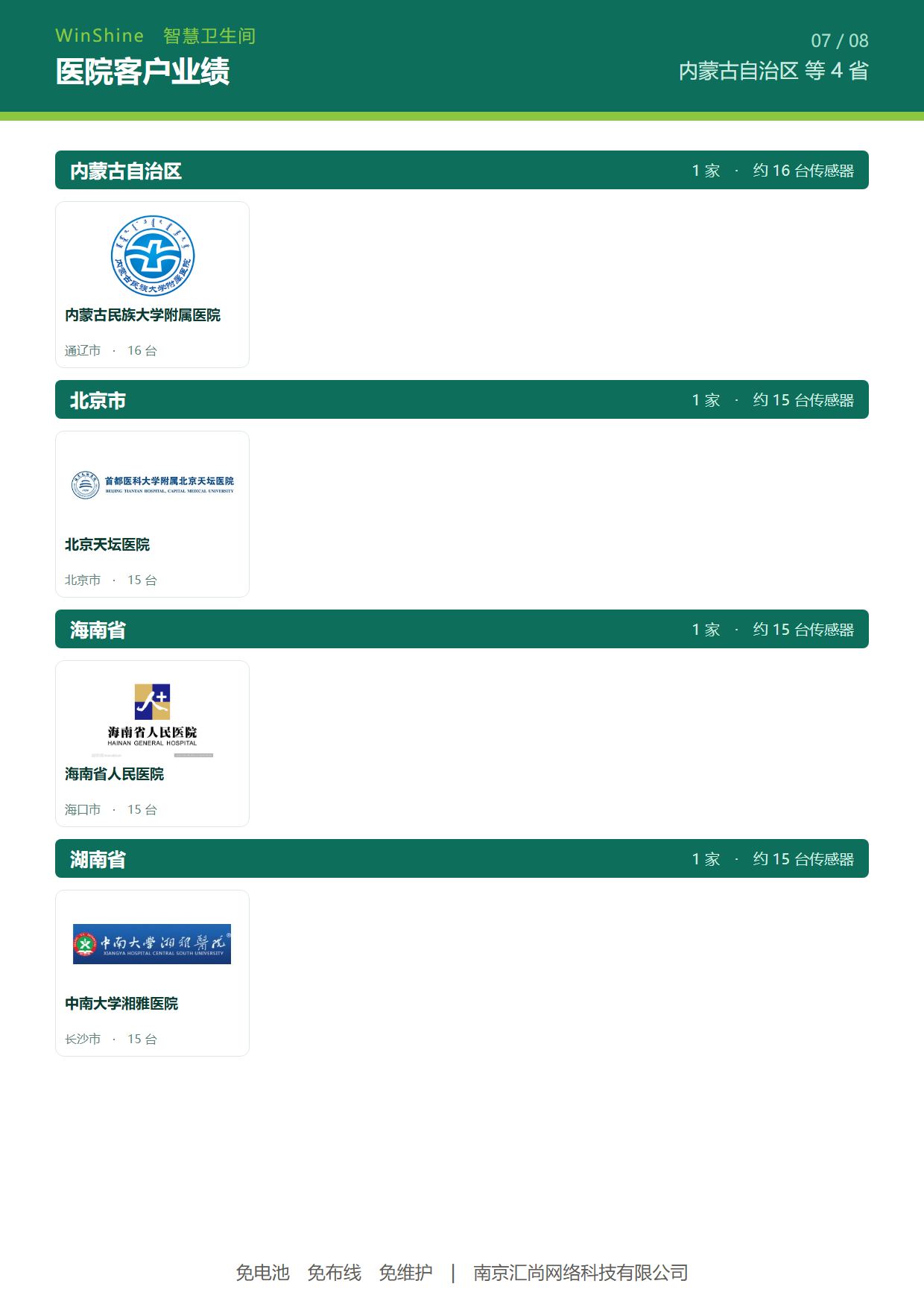
Working with facility-management partners including Aramark, WinShine's sensing network is deployed in 92 hospitals across China. The table groups them by province — click a province to expand the list, or search by hospital or city. Hospital names are listed in their official Chinese form.
Device counts are approximate figures from project records and indicate deployment scale; 89 hospital crests are collected in the overview below.
Tell us your scenario, floor area and retrofit constraints; we will prepare a proposal with a model list and budget range.
Reach us here:
You can also call +86 25 5260 9811, or scan the WeChat QR code in the footer to leave a message.